
Why Most Solo Entrepreneurs Operate Without a System
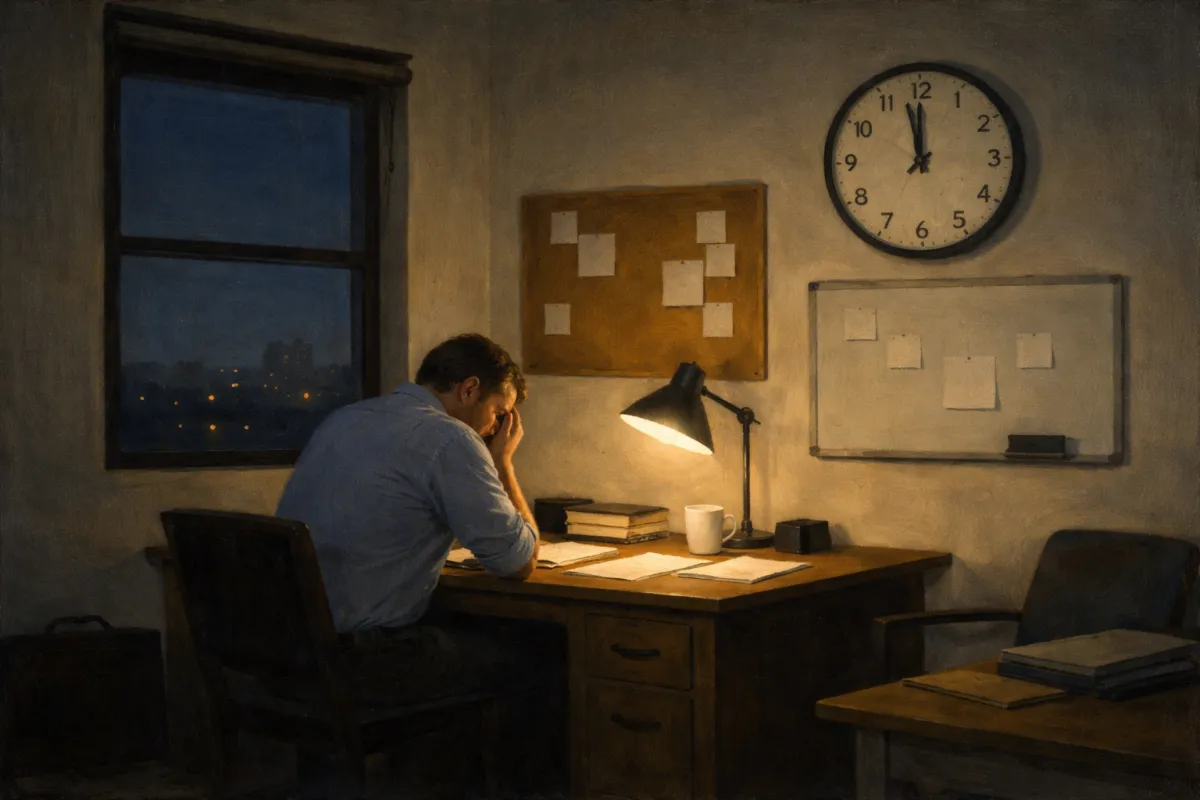
There is a particular kind of exhaustion that has nothing to do with how hard you are working.
You are busy. You are putting in the hours. You are handling clients, chasing ideas, managing the chaos of running something on your own. But at the end of the week, you cannot quite point to what moved forward. You feel productive, but you also feel like you are treading water. Something is off, but you cannot name it.
Most of the time, that feeling is not a motivation problem. It is not a talent problem. It is a structure problem. And the structure that is missing has a simple name: a system.
Nobody Teaches You This
Here is something worth saying out loud: most people were never taught how to build a personal operating system. It was not part of school. It was rarely modeled at home. And for a lot of men who grew up without a mentor or a structured environment, the concept of deliberately designing how you work and live simply never came up.
I did not figure this out until my mid-forties. For most of my working life, I was moving fast without a real framework underneath me. I was not lazy. I was putting in the effort. But effort without structure is just activity, and activity without direction does not compound into anything.
That is the gap nobody talks about. Most solo entrepreneurs are not failing because they lack ambition or skill. They are operating without a system and do not even know it.
The Freedom Trap
A lot of people go out on their own specifically because they are done with someone else's rules. The corporate structure felt suffocating, so they left it. And now the last thing they want is to replace one set of constraints with another.
That instinct is understandable, but it is also where things start to unravel.
Freedom without structure is not actually freedom. It is drift. And drift is slow, quiet, and easy to rationalize. You tell yourself you are being flexible, staying creative, going with the flow. Meanwhile, the days blur together and the work that actually matters keeps getting pushed.
The difference between a corporate system and a personal one is ownership. A personal system is not something imposed on you. It is something you build, test, and adjust over time. It reflects how you actually work, what you actually value, and what you are genuinely trying to build. That is not a cage. That is clarity.
What a System Actually Is
A system is not a complicated thing. At its core, it is a plan of action that covers what you need to do, in what order, across the areas of life that matter to you.
For most solo entrepreneurs, that means more than just work. It means a work system, a health system, a family system. Each one operates a little differently, but together they create a structure that keeps you from neglecting one area while pouring everything into another.
I spent years doing exactly that. I was all-in on work and slowly neglecting everything else. The health slipped. The personal time disappeared. I was numbing out in the evenings instead of recovering. I thought stepping back from work would cost me professionally. It did not. It turned out I was not working hard; I was working stupidly. When I got healthier, my work improved. I did not need the afternoon crash anymore. I showed up differently. People noticed.
That was not motivation. That was structure working.
The Warning Signs Most People Miss
The tricky part about operating without a system is that it does not feel like a crisis. You can go years without one and still appear to be functioning. The warning signs are there, but they are easy to dismiss.
You keep telling yourself things will come together next month. You are busy but not progressing. You are tired in a way that sleep does not fix. One area of life is consuming everything, and you are quietly aware that the other areas are suffering.
Most men in this situation do not hit rock bottom. They just drift. And drifting is dangerous precisely because it is comfortable enough to tolerate.
The question worth asking is not "Am I okay?" It is "Is this actually working?" That requires honesty. It requires the kind of reflection that most busy people avoid because slowing down feels like falling behind.
You Do Not Have to Wait for a Wake-Up Call
My own shift came from a period of honest reckoning with my health and how I was living. It may sound dramatic in retrospect, but it was not a single catastrophic event. It was a slow accumulation of small warning signs that I finally stopped ignoring.
Here is what I want to be clear about: you do not have to wait for that. The weekly review, the honest look at all areas of your life, the willingness to ask whether your current system is actually serving you, that is available to anyone right now.
James Clear, Cal Newport, David Allen, these writers have done the deep research and built the frameworks. Read them. Use them. What I am offering here is something different: a real-world account of what it looks like when a regular guy finally starts paying attention.
The system you build will not look like mine. It should not. Every personal operating system is different because every life is different. The goal is not to copy someone else's protocols. It is to design something that actually fits how you work, then stay curious enough to keep refining it.
Start With Reflection, Not Perfection
If you are a solo entrepreneur who suspects your system is missing or broken, the first move is not to download a new productivity app. It is to sit down, look at your week honestly, and ask a few direct questions.
Where is your time actually going? Which areas of your life are running on fumes? What have you been putting off for months because there is no structure holding you accountable to it?
That reflection is the beginning of a system. Not the whole thing, but the honest starting point.
The Long Game is not built on motivation. It is built on structure that holds when motivation runs out. If you want to go further with this, the frameworks and thinking behind that approach live at The Long Game.